
-
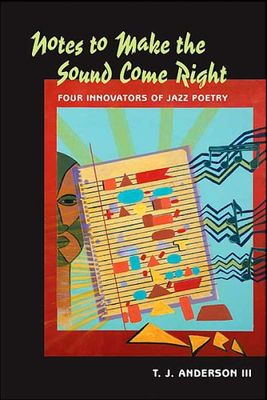
Notes to Make the Sound Come Right: Four Innovators of Jazz Poetry
T. J. Anderson
"In this book, T.J. Anderson, son of the brilliant composer, Thomas Anderson, Jr., asserts that jazz became in the twentieth century not only a way of revising old musical forms, such as spiritual and work song, but also a way of examining the African American social and cultural experience. He traces the growing history of jazz poetry and examines the work of four innovative and critically acclaimed African American poets whose work is informed by a jazz aesthetic: Stephen Jonas (1925?-1970) and the unjustly overlooked Bob Kaufman (1925-1986), who have affinities with Beat poetry; Jayne Cortez (1936- ), whose work is rooted in surrealism; and the difficult and demanding Nathaniel Mackey (1947- ), who has links to the language writers. Each fashioned a significant and vibrant body of work that employs several of the key elements of jazz."--Book jacket
-
A New Stoicism
Lawrence C. Becker
What would stoic ethics be like today if stoicism had survived as a systematic approach to ethical theory, if it had coped successfully with the challenges of modern philosophy and experimental science? A New Stoicism proposes an answer to that question, offered from within the stoic tradition but without the metaphysical and psychological assumptions that modern philosophy and science have abandoned. Lawrence Becker argues that a secular version of the stoic ethical project, based on contemporary cosmology and developmental psychology, provides the basis for a sophisticated form of ethical naturalism, in which virtually all the hard doctrines of the ancient Stoics can be clearly restated and defended.
-
Habilitation, Health, and Agency: A Framework for Basic Justice
Lawrence C. Becker
Lawrence C. Becker introduces an unconventional set of background ideas for future philosophical work on normative theories of basic justice. The organizing concept is habilitation -- the process of equipping a person or thing with functional abilities or capacities. The specific proposals drawn from the concept of habilitation are independent of any particular set of distributive principles. The result is a framework for theory that includes a metric for the pursuit of basic justice, but not a normative theory of it.
-
On Justifying Moral Judgments
Lawrence C. Becker
Much discussion of morality presupposes that moral judgments are always, at bottom, arbitrary. Moral scepticism, or at least moral relativism, has become common currency among the liberally educated. This remains the case even while political crises become intractable, and it is increasingly apparent that the scope of public policy formulated with no reference to moral justification is extremely limited.
The thesis of On Justifying Moral Judgments insists, on the contrary, that rigorous justifications are possible for moral judgments. Crucially, Becker argues for the coordination of the three main approaches to moral theory: axiology, deontology, and agent morality. A pluralistic account of the concept of value is expounded, and a solution to the problem of ultimate justification is suggested. Analyses of valuation, evaluation, the ‘is-ought’ issue, and the concepts of obligation, responsibility and the good person are all incorporated into the main line of argument.
-

Property Rights: Philosophic Foundations
Lawrence C. Becker
Property Rights: Philosophic Foundations, first published in 1977, comprehensively examines the general justifications for systems of private property rights, and discusses with great clarity the major arguments as to the rights and responsibilities of property ownership. In particular, the arguments that hold that there are natural rights derived from first occupancy, labour, utility, liberty and virtue are considered, as are the standard anti-property arguments based on disutility, virtue and inequality, and the belief that justice in distribution must take precedence over private ownership.
Lawrence Becker goes on to contend that there are four sound lines of argument for private property that, together with what is sound in the anti-property arguments, must be co-ordinated to form the foundations of a new theory. He therefore expounds a concise but sophisticated theory of property that is relevant to the modern world, and concludes by indicating some of the implications of his theory.
-
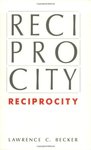
Reciprocity
Lawrence C. Becker
The tendency to reciprocate – to return good for good and evil for evil – is a potent force in human life, and the concept of reciprocity is closely connected to fundamental notions of ‘justice’, ‘obligation’ or ‘duty’, ‘gratitude’ and ‘equality’. In Reciprocity, first published in 1986, Lawrence Becker presents a sustained argument about reciprocity, beginning with the strategy for developing a moral theory of the virtues. He considers the concept of reciprocity in detail, contending that it is a basic virtue that provides the basis for parental authority, obligations to future generations, and obedience to law. Throughout the first two parts of the book, Becker intersperses short pieces of his own narrative fiction to enrich reflection on the philosophical arguments. The final part is devoted to extensive bibliographical essays, ranging over anthropology, psychology, political theory and law, as well as the relevant ethics and political philosophy.
-
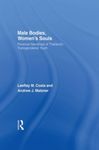
Male Bodies, Women's Souls: Personal Narratives of Thailand's Transgendered Youth
LeeRay M. Costa
"The Thai term sao braphet song ("second type of women") describes males who reject the gender of masculinity for femininity. Male Bodies, Women's Souls: Personal Narratives of Thailand's Transgendered Youth uses the narrative method, stories in the words of these "second type of women," to analyze these transgendered experiences. This previously ignored perspective of the contemporary Thai sex/gender system gained through this theoretical and methodological approach offers students and general readers a rich, more readily accessible foundation of knowledge about gendered subjectivity and sex/gender systems. This unique book features in-depth, autobiographical life histories from individual Thai transgendered youth."
-
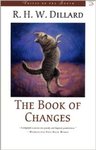
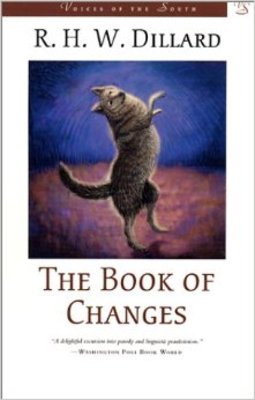
The Book of Changes
Richard H.W. Dillard
"Nothing remains intact for long: Men become women or change into screaming wolves; women appear in men's boxer shorts; suburban folk under the names of Herbert Hoover, Oscar Wilde, and the brothers Marx drift in and out of the novel; even that ingenious puppet-maker and puller of strings, Vladimir Nabokov, shows up briefly. In the midst of this bizarre world, Dillard stages an intricate detective story that will keep the reader on edge from its baffling beginning to its astonishing end. Under the shadowy lead of amateur sleuth Sir Hugh Fitz-Hyffen, evidence arises that links events stretching from the mountains of Romania to the ancient strongholds of Scotland to the tenements of Newark, New Jersey. An enormous diamond, a mask said to be that of Fu Manchu, and a series of brutal "Zodiac" killings are but three of the strands in the complex net of this thoroughly postmodern and highly entertaining mystery."--Book jacket.
-
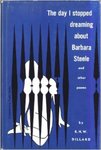
The Day I Stopped Dreaming About Barbara Steele, and Other Poems
Richard H.W. Dillard
Poetry by Richard H.W. Dillard.
-
The Sounder Few: Essays from the Hollins Critic
Richard H.W. Dillard
Selected essays from the Hollins Critic.
-
Twayne Companion to Contemporary Literature in English : From the Editors of the Hollins Critic
Richard H.W. Dillard and Amanda Cockrell
"Part of the new Twayne Companion to Literature series, this set features 101 select essays reprinted from The Hollins Critic (produced by Hollins University in Roanoke, Virginia) during the period between 1975 and 2002. A chronology of that period's important literary publications, awards, and events sets the context for the essays at the beginning of volume 1. Each essay, usually between 5,000 and 6,000 words, surveys a contemporary author's entire body of work and is intended to 'do something more than merely offer a review of his (or her) books and something less than deliver a verdict on his (or her) 'place' in literary history.' Essays also feature a brief biography accompanied by a line-art portrait of the writer, a bibliography of the author's works, and, where applicable, a career update. The essays, written by literary scholars, were chosen because of the excellence of the writing and a perceived lack of subject coverage elsewhere.
Included authors are mostly novelists or poets, primarily American but also Canadian, English, or Irish. Coeditor Dillard takes pains to discuss the collapse of the traditional literary canon in his introduction, thus banishing all expectation of national figures and trying to exonerate himself from a canon debate. Instead, he offers examples of the current "openness and . . . genuine diversity of style and content far more complex, varied, and interesting than one shaped merely by the demands of political correctness." Indeed, the authors covered have an impressive range of styles: among the included are postmodernists Thomas Pynchon and Paul Auster, science fiction writer Octavia Butler, historical fiction writer Thomas Flanagan, popular novelist Anne Tyler, cutting-edge novelist Richard Powers, and poets Mary Jo Salter and John Ashbery. An index at the back of volume 2 facilitates locating people and titles."--Amazon.com description
Printing is not supported at the primary Gallery Thumbnail page. Please first navigate to a specific Image before printing.